Sunday, May 15, 2022

"Mustique Island"

Sarah McCoy is the New York Times, USA Today, and international bestselling author of the novels Mustique Island; Marilla of Green Gables; The Mapmaker’s Children; The Baker’s Daughter, a 2012 Goodreads Choice Award Best Historical Fiction nominee; the novella “The Branch of Hazel” in Grand Central; The Time It Snowed in Puerto Rico; and Le souffle des feuilles et des promesses (Pride and Providence).

Her work has been featured in Real Simple, The Millions, Your Health Monthly, Huffington Post, Read It Forward, Writer Unboxed, and other publications. She hosted the NPR WSNC Radio monthly program “Bookmarked with Sarah McCoy” and previously taught English writing at Old Dominion University and at the University of Texas at El Paso.

She lives with her husband, an orthopedic sports surgeon, their dog Gilly, and cat Tutu in Winston-Salem, North Carolina.

McCoy applied the Page 69 Test to Mustique Island and reported the following:
From page 69:
No judgment, condemnation, spite, or shame. Just a woman partaking of God’s creation. How could that be wrong?

She slipped the straps of her dress over her shoulders and held it over her breasts a beat, Harry’s words—wobbly bits—resurfacing. She closed her eyes and listened to the tumble and crash of the cresting waves until the sound drowned out all thoughts. She let the dress drop then and walked forward into the surf. Bubbles tickled up from her belly button. The wind swept her hair back and kissed her lips briny. She put her arms out to either side, bare-chested to the horizon. The sun spread over skin that had never seen its light and warmed her like a giant ember.

You are beautiful, she thought to the sea, the heavens, and higher.

So lost in the moment, she’d forgotten Patrick until his shouts drew her to the shore.

“. . . too far!”

The water’s roar and the thudding of her heart made it hard to understand what he was saying. She turned over her shoulder to hear better.

“That’s it.” He’d come in knee-deep, angling his camera. “Stay like that.”

The waves crested frothy over the coral, fizzing up like champagne. She reached forward to let the bubbles buoy her and liked knowing Patrick was behind. He wasn’t an anchor like Harry had been. Rather, he felt like the halyard on a sail. The sand beneath her feet gave, and she sank into the silkiness of the current’s push and pull.

“I got it!” he said.

But she remained facing the blue on blue, transfixed by a beauty that had nothing to do with her. This was something bigger. Beauty that could not be reproduced. Beauty that defied lineage and surpassed human comprehension. It overwhelmed her with its power and for the first time in her life, she honestly prayed.
This Page 69 Test is some kind of soothsayer mojo. It absolutely applies.

In this scene, my protagonist Willy May Michael walks off the beach of Mustique Island into the ocean so that her new ‘friend’ Patrick Lichfield (a famous photographer) can take her picture. It’s glamour and sex and beachy. But it’s so much more than that, too. It’s a woman feeling all the dichotomies faced in her era (1972) and the ones readers continue to face now (2022): the pride and shame in our bodies, the pleasure and sorrow in our emotions, the longing and loathing in our own desires, the push and pull of the world’s forces. Regardless of gender, what all of us really want is to be fully seen and accepted. That’s the vital marrow of life and the most beautiful part of existence. True freedom is being able to fully love and being fully loved.

Page 69 gives great insight into Willy May and the book as a whole. It’s about finding yourself while losing yourself. It isn’t all one or all the other either. Both are necessary. The shift of these forces is as much a part of the natural world as the tides.

Mustique Island is an escape that doesn’t just send the reader sailing into the frothy waves. It has a compass that I hope navigates readers to new heart territories.
Learn more about the book and author at Sarah McCoy’s website, Facebook page, Instagram page, and Twitter perch.

Coffee with a Canine: Sarah McCoy and Gilbert.

The Page 69 Test: The Time It Snowed in Puerto Rico.

The Page 69 Test: The Baker's Daughter.

The Page 69 Test: The Mapmaker's Children.

The Page 69 Test: Marilla of Green Gables.

--Marshal Zeringue

Thursday, May 12, 2022

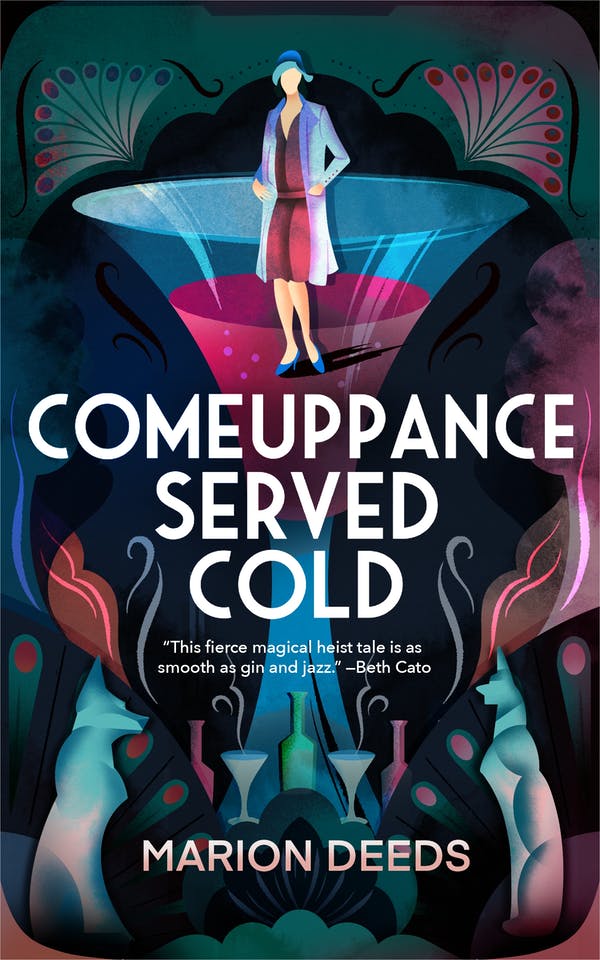
"Comeuppance Served Cold"

Marion Deeds was born in Santa Barbara, California and moved to northern California when she was five. She loves the redwoods, the ocean, dogs and crows.

She’s fascinated by the unexplained, and curious about power: who has it, who gets it, what is the best way to wield it. These questions inform her stories.

Deeds applied the Page 69 Test to her new book, Comeuppance Served Cold, and reported the following:
In Comeuppance Served Cold, most of page 69 is a song, a hate-filled street-chant aimed at the local shape-shifters.

Comeuppance Served Cold is a fantasy noir novella set in 1929 Seattle. Dolly White, the protagonist, has been hired by a powerful, wealthy man to keep his daughter from drinking and taking drugs until her arranged marriage occurs. The family has enemies, and one person in particular is very interested in the behavior of the rebellious daughter. Dolly has goals of her own, but she’s keeping them to herself.

On page 69 she and her charge, Fiona, are on their way to prepare for the engagement party when they pass a street demonstration against shape-shifters.

The chauffeur obligingly sings a couple of verses from the chant, which contain, among other things, references to weapons. Dolly questions the chauffeur about why shape-shifters are targeted in Seattle, and gets answers that mix casual bigotry with flat-out untruths, although it’s clear the driver believes them. The weapons mentioned come back into the story later on.

While page 69 doesn’t show the reader too much about the plot, it illuminates one of my themes perfectly. In the story I look at racism and hatred, specifically the deliberate fomenting of hatred against a group solely for the political or material benefit of others. Throughout the book Dolly has heard slurs against shape-shifters, but page 69 is a set-piece of the manipulation. I hope that Dolly’s skepticism also shows through—she’s not buying the shape-shifters-are-evil line for one little minute.

This page also shows us a bit of Fiona’s life and the household she was raised in. The reader sees why this young woman might have turned to alcohol and street-drugs. It’s clear Dolly’s going to be a disruption, and a big one.
Follow Marion Deeds on Twitter.

Writers Read: Marion Deeds.

--Marshal Zeringue

Tuesday, May 10, 2022

"The Last Queen"

Chitra Banerjee Divakaruni is an award-winning and bestselling author, poet, activist and teacher of writing. Her work has been published in over 50 magazines, including the Atlantic Monthly and The New Yorker, and her writing included in over 50 anthologies, including Best American Short Stories, O. Henry Prize Stories, and the Pushcart Prize Anthology. Her books have been translated into 29 languages, including Dutch, Hebrew, Bengali, Russian and Japanese; many have been used for campus-wide and city-wide reads. Several of her works have been made into films and plays. She lives in Houston with her husband Murthy and has two sons, Anand and Abhay.

Divakaruni applied the Page 69 Test to her new novel, The Last Queen, and reported the following:
On page 69 the heroine, the beautiful Jindan, finds out from her brother Jawahar that her father Manna has lost a large sum of money gambling. Here is what happens next:
Today Manna seems oddly cheerful. He tells me that he has invited a guest to dinner. I’m surprised. He’s never done this before. He brings me fresh mutton and greens. Ghee to melt over the rotis.

“Cook properly, beti. It’s important.” He rummages through my clothes and tells me to wear the maroon lehenga, my prettiest outfit.

The guest, a merchant from a nearby town, is a portly man almost as old as Manna.

He doesn’t speak much, except to compliment my cooking and ask for seconds. After dinner, when the men go to the yard to talk, Jawahar creeps out and eavesdrops. Later he tells me that Manna was negotiating my marriage.

I’m aghast. “With that man? I won’t marry him! I can’t.”
Page 69 gives readers a good sense of the drama of the heroine’s early life, especially one important day. It intensifies an important conflict in the novel—between Jindan and her father, Manna—and gives the reader a glimpse into her strong personality, and her refusal to meekly accept whatever life hands to her. This quality will shape her life in the coming years.

The heroine of the novel, the beautiful Jindan, is in love with the king, Maharajah Ranjit Singh, for whom her father Manna works as a dog-trainer. But at this point she is unsure of the king’s feelings for her though he had shown a great deal of interest in her a while back. Since then, he has been away on official business, and she has not heard from him.

Jindan’s father Manna (who does not believe the king is serious about his daughter) wants to marry her off to an old merchant for quick financial gain—the man has agreed to pay Manna’s debts.

Jindan refuses. This is a good indication of her character. Though young, she’s already strong-willed and unwilling to obey her father’s dictates. This quality will push her into many adventures as her life unfolds.
Learn more about the book and author at Chitra Banerjee Divakaruni's website.

The Page 69 Test: Oleander Girl.

--Marshal Zeringue

Sunday, May 8, 2022

"An Imperfect Plan"

Addison McKnight is the pen name for Nicole Moleti and Krista Wells. After over a decade of writing nonfiction, their common interests in women’s emotions and the cultural obsession with perfection sparked an idea for their debut novel, An Imperfect Plan. With six jobs and six children between them, they wrote their first book on Saturday nights and on the sidelines of their children’s games. They reside in West Hartford, Connecticut with their families.

The authors applied the Page 69 Test to An Imperfect Plan and reported the following:
Unbelievably, page 69 of An Imperfect Plan perfectly surmises the theme of the book.

An Imperfect Plan revolves around a woman who uses donor eggs to conceive her twin boys and doesn’t tell her husband. Greta O’Brien, a wealthy hedge-fund manager is forced to confront the making of her family when tragedy strikes her teenage sons.

The first sentence on page 69 of An Imperfect Plan is very telling. Readers will get a very accurate idea of the whole work as Greta shares her secret with her closest friend.

“He doesn’t know about the donor, and I am never telling him,” Great said, instantly regretting that she’d shared such a big secret with her friend.

The rest of the page is dialogue between Greta and her friend, Audrey, who tries to convince Greta to tell her husband such an important fact.

“It isn’t right” Audrey persisted.

Greta ultimately ignores her friend’s advice which leads to the twists and turns of Greta’s story of motherhood and a family that she built on lies. Greta’s story goes back and forth with Colette’s. Colette is the woman who at age 40 went back to have her frozen eggs implanted only to find that they were gone…without her consent, unbeknownst to her, she believes her ex-husband sold her frozen eggs. As the story unfolds, the two women’s lives intertwine and the reader is taken on a rollercoaster ride of twists and turns, ultimately ending with the truth setting both women free.
Visit Addison McKnight's website.

--Marshal Zeringue

Friday, May 6, 2022

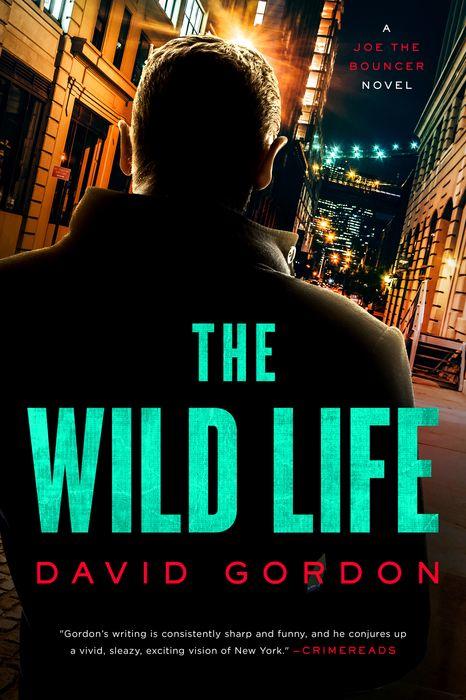
"The Wild Life"

David Gordon was born in New York City. His first novel, The Serialist, won the VCU/Cabell First Novel Award and was a finalist for an Edgar Award. It was also made into a major motion picture in Japan. His work has also appeared in The Paris Review, The New York Times, Purple, and Fence, among other publications.

Gordon applied the Page 69 Test to his new novel, The Wild Life, and reported the following:
The problem with playing this game with a thriller is the risk of giving away an important plot twist – and I have had to refrain once or twice with past books. This time is different. Here is page 69 in its entirety:
“Nah,” Fusco grunted. “Just something the FBI asked me to keep an eye out for involving foreign girls. Nothing important.”

“Damn Feebs should do their own work, right?”

“You said it,” Fusco mumbled, thanked him, and hung up. Then, while he printed the file out, he switched to his burner phone and called Gio.
Hmmm. One is tempted to jump to page 169, or 269, but fair is fair and while it won’t make much sense to a random browser this is actually an important bit of story, which does tell us a lot about the world of the novel. As some of you may know, The Wild Life is the fourth in a series of books about a strip club bouncer and ex-Special Ops vet named Joe who sidelines as a fixer for the bosses of the New York underworld, handling problems for which normal folks would call the police: suspected terrorists, bomb scares, or in this case, a serial killer preying on high-end sex workers. In this scene, Fusco is a police detective and he is talking to Fry, a fellow cop. What we know, and they don’t, is that they are both crooked cops. Fusco is a gambler, indebted to Gio Caprisi who is Joe’s boss too, and Fry, a vice cop, is on the payroll of one of Joe’s suspects. In other words, they are both lying and trying to manipulate each other. This reflects the world that these characters live in, thoroughly corrupt, from the top down, and when those in power are the biggest villains, individuals are left to make their own way, live by their own codes, and help each other, or not.

That said, I do recommend page 169 and 269, which are both pretty action-packed!
Visit David Gordon's blog.

The Page 69 Test: The Serialist.

The Page 69 Test: Mystery Girl.

The Page 69 Test: White Tiger on Snow Mountain.

The Page 69 Test: The Hard Stuff.

Q&A with David Gordon.

--Marshal Zeringue

Thursday, May 5, 2022

"Child Zero"

Chris Holm is the author of the cross-genre Collector trilogy, the Michael Hendricks thrillers, and thirty-odd short stories in a variety of genres. His work has been selected for The Best American Mystery Stories, named a New York Times Editors' Choice, appeared on more than fifty year's best lists, and won a number of awards, including the 2016 Anthony Award for Best Novel. He lives in Portland, Maine.

Holm applied the Page 69 Test to his new standalone biological thriller, Child Zero, and reported the following:
From page 69:
Even in the dim light of the squat’s lobby, Lucas looked worse than Brian remembered, pallid and dope-skinny. Truth be told, he didn’t smell too good, either, his breath and sweat tinged with the pungent scent of methamphetamine. He wore a dingy pair of matchstick jeans and a sleeveless undershirt yellowed at the edges. His lank hair had been cut into a haphazard mohawk some time ago and left to grow out. His eyes were sunken and bloodshot, the flesh around them the color of a fading bruise.

“Sorry for the runaround,” he said, “but me and mine can never be too careful. We ain’t exactly paying rent on this place, and some of our business is . . . delicate.”

“Delicate?” Mat asked.

“He means illegal.”

“No, I mean delicate—but that don’t mean it ain’t both.” Lucas winked at Mat conspiratorially. “So, kid, you got a name?”

When Mat hesitated, Brian said, “Kid is fine for now.”

“Suit yourself,” Lucas replied. “You know he ain’t got no shoes on, right?”

“Gee, I hadn’t noticed. Thanks for calling it to my attention.”

“There’s no need to get snippy, dude. I thought maybe I could help, is all. What size shoe you take, kid?”

Mat looked to Brian, who nodded encouragingly. “Seven, I guess. Sometimes seven and a half.”

“But a grown-up seven, right? Not, like, kid-sized or whatever?”

“Yeah,” Mat replied. “I’m twelve,” he added, as if that clarified anything.

Lucas smiled. “Cool. I can work with that. Follow me.”
Okay, I had to cheat a little, because the opening paragraph of this excerpt straddles the page break between sixty-eight and sixty-nine, and features some table-setting that seems integral to the scene. I compensated by lopping off the last paragraph of page sixty-nine, because it likewise carries onto the next page.

That said, I’m pretty psyched with how Child Zero fares. I’ve made no bones about the fact that this book is a scientific thriller in the vein of Michael Crichton—but if you strip away the science, it’s essentially the story of a little kid with a big secret that some very dangerous people would do anything to learn.

Is that obvious from this excerpt? Probably not, but the scene provides some tantalizing hints. Who is this kid? Why is he barefoot? What the heck is he doing in some sketchy meth head’s squat?

If I have one reservation about this excerpt, it’s that it makes Child Zero sound more like a seedy noir than the mainstream thriller it actually is. Then again, I happen to like seedy noir, so I’ll take it.

Bottom line? If this passage was your cup of tea, or shot of whiskey, you’ll probably dig Child Zero… and if it wasn’t, you still might.

The kid’s name is Mateo, by the way, and he’s awesome—bright, scrappy, brave, and kind. If you wanna find out what happens to him next, you’re gonna hafta read the book.
Visit Chris Holm's website.

The Page 69 Test: The Killing Kind.

The Page 69 Test: Red Right Hand.

--Marshal Zeringue

Monday, May 2, 2022

"Vigil Harbor"

Julia Glass's books of fiction include the best-selling Three Junes, winner of the National Book Award, and I See You Everywhere, winner of the Binghamton University John Gardner Fiction Book Award. Other published works include the Kindle Single Chairs in the Rafters and essays in several anthologies. A recipient of fellowships from the National Endowment for the Arts, the New York Foundation for the Arts, and the Radcliffe Institute for Advanced Study, Glass is a Distinguished Writer in Residence at Emerson College. She lives with her family in Marblehead, Massachusetts.

Glass applied the Page 69 Test to her new novel, Vigil Harbor, and reported the following:
My novel Vigil Harbor takes place twelve years in the future and is narrated by eight characters, each with a distinct voice and perspective, so open up at random to various pages and you may feel like you're looking at a series of different stories (in a way, you are, though they are tightly interconnected). Page 69 lands you inside a key memory of a key character, Connie McKenna, a wife and mother in her thirties whose only sibling was killed on a combat tour in Afghanistan, mere weeks after his father died of cancer. Here she recalls the tail end of her brother's funeral, over a decade earlier:
...I half wondered if they would applaud after the deafening gun salute. Equally repugnant and surreal to me were the Vigil Harbor colonial reenactors, our self-appointed "regiment"—seven of them, uninvited—who, at the start of the ceremony, staged a salute of their own, their ridiculous muskets aimed at the clouds. The smell of gunpowder, intensified by August heat, made me retch.

Afterward, as people walked to their cars, Reverend Chalmers stopped me and put a hand on my shoulder. He said, "Caleb gave his life for our country, and he rests now in the strong arms of a loving God."

I shrugged off the unwelcome hand and said, "He did not give his life. His life was taken." I saw my mother being helped into someone else's car by two friends who, like her, had been recently widowed.

I skipped the reception at the VFW. I drove to the big, bland sports bar in Knowles, where I knew that the afternoon regulars, intent on the Sox, would give me a wide berth. On the way out of town, only by happenstance, I drove most of the route Caleb and I walked together for the two years we overlapped at the High. The route takes you right past Memorial Park, a shady green lawn where slabs of marble and granite bear the names of boys cut down by the endless scythings of war. I never fully understood why Caleb enlisted (never mind re-enlisted), and as I drove past the park, I wondered if the statues and plinths and their conspiratorial message of manhood and duty and sacrifice had wormed its way into my brother's heart as he passed by twice a day going to and from school, a place he had longed to escape.

From the bar, I called my best friend from college. While I had frittered away the two years after graduation by working for a gig agency in Boston (trying to figure out what to do with my art-psych major) and cutting hair—a self-taught skill with which I'd earned pocket money since high school—Harold had found a bonafide job as the production manager of a newspaper in Traverse City, Michigan. When he moved there, it was nothing more to him than a thumbtack on a map, but he was willing to take his chances. And he loved it....
The town of Vigil Harbor, both its colorful colonial history and its rugged coastal topography, exerts a strong influence on those who live there. This is by no means a war novel, yet looking at page 69 in isolation reminded me that the legacy of America's many wars, along with the illusion of patriotic pride in a righteous might, is a theme woven throughout the book. Connie, her husband, and their eight-year-old son, though they live in what appears to be a secure, privileged community (so far mostly immune to the perils of the larger world) will be caught, by story's end, in the midst of an explosive crisis caused by wider political violence.
Follow Julia Glass on Facebook.

--Marshal Zeringue

Saturday, April 30, 2022

"Disappeared"

Bonnar Spring writes eclectic and stylish mystery-suspense novels with an international flavor. A nomad at heart, she hitchhiked across Europe at sixteen and joined the Peace Corps after college. Bonnar taught ESL—English as a Second Language—at a community college for many years. She currently divides her time between tiny houses on a New Hampshire salt marsh and by the Sea of Abaco.

Spring applied the Page 69 Test to her new novel, Disappeared, and reported the following:
From page 69:
defuse the situation, do whatever he thinks needs to be done. I’m working blindfolded here.”

“How can Mr. Ohana contact you?”

I leave my number, but considering my difficulties in getting a signal, I add, “If Gil can’t reach me, I’ll call back tonight.” Then I suggest that, if he wants to act quickly, he could contact Sam Monatti at the American Consulate in Casablanca. “Gil might have to light a fire underneath him to get him moving, but I’ll bet he’s better equipped to do that than I am.”

She gives me Gil’s cell phone number. “I’ll alert Mr. Ohana, but please call as soon as you find his wife.” The secretary finishes on a hiccup, and we both know she’s not saying— “or if you don’t find her.”

I walk down to the car again and start it with relief. Not all I hoped for, but it was easier not to have confronted Gil directly. Better to get his efficient secretary to relay the story minus my emotional baggage— like, what the hell have you gotten my sister mixed up in?
Page 69 in Disappeared is the half-page conclusion to Chapter 11. It’s the end of a phone call between Julie, the main character, and her brother-in-law’s secretary. Julie’s sister Fay had disappeared from their hotel room in Marrakech three days earlier.

Snooping through Fay’s belongings and questioning the hotel staff has provided Julie with clues to her sister’s whereabouts—but no idea why she went there. When Julie narrowly eludes a knife-wielding attacker, she realizes she is in danger if she passively waits for her sister in town. She flees to Fay’s remote destination, only remembering in the last town she’ll pass to contact Fay’s husband, whom she blames for the trouble her sister is in. Her parting thought is what the hell have you gotten my sister mixed up in?

When Julie hangs up the phone, starts her car, and drives away, that’s the last communication she’ll have with the rest of the world. She’s on her own, heading into the Sahara Desert. While short on words, the action on page 69 of Disappeared is a watershed moment, marking the end of Julie’s quest for her sister in the modern world of telephones, restaurants, internet, and rental cars. And the beginning of the ordeal at the heart of Disappeared.

An intriguing instance of the Page 69 Test!
Visit Bonnar Spring's website.

Q&A with Bonnar Spring.

--Marshal Zeringue

Thursday, April 28, 2022

"Our Little World"

Karen Winn received her MFA from Fairleigh Dickinson University. She also holds a doctoral degree in nursing. Born and raised in New Jersey, she now lives in Boston with her husband and two children.

Winn applied the Page 69 Test to her new novel, Our Little World, and reported the following:
On page 69 in my debut novel, Our Little World, my twelve-year-old protagonist, Bee, and her sister, Audrina, are in lockdown after the disappearance of a neighborhood girl, Sally. It’s 1985, pre-World Wide Web, and the only way any neighborhood kids are getting information about what happened is through old-school phone gossip. Because Bee was there at the lake when Sally went missing, and because she is friends with Sally’s older brother, Max, Bee finds herself, unexpectedly, the center of attention. She relishes this position of power and slowly reveals bits and pieces of information to her friends: what it was like at the lake that day, the last thing Sally said to her, even the current situation at Sally’s house when she visits Max.

This Page 69 Test works to a certain extent: Readers will understand that a child has gone missing; that it’s an unusual event in this otherwise safe and small, tightknit community; that Bee, my protagonist, was there at the lake when Sally disappeared; that it’s likely the 80s (since Bee’s family just got call waiting on their home phone); that it’s likely New Jersey (since one of the neighborhood fathers works for New Jersey Bell Atlantic); that Sally’s family is incredibly distraught (the dirty dishes are piling up); and that Bee is relishing the new attention she receives. Where this Page 69 Test falls severely short, however, is the lack of attention to the complex relationship Bee has with her sister, Audrina—which is the central focus of the novel.
Visit Karen Winn's website.

--Marshal Zeringue

Tuesday, April 26, 2022

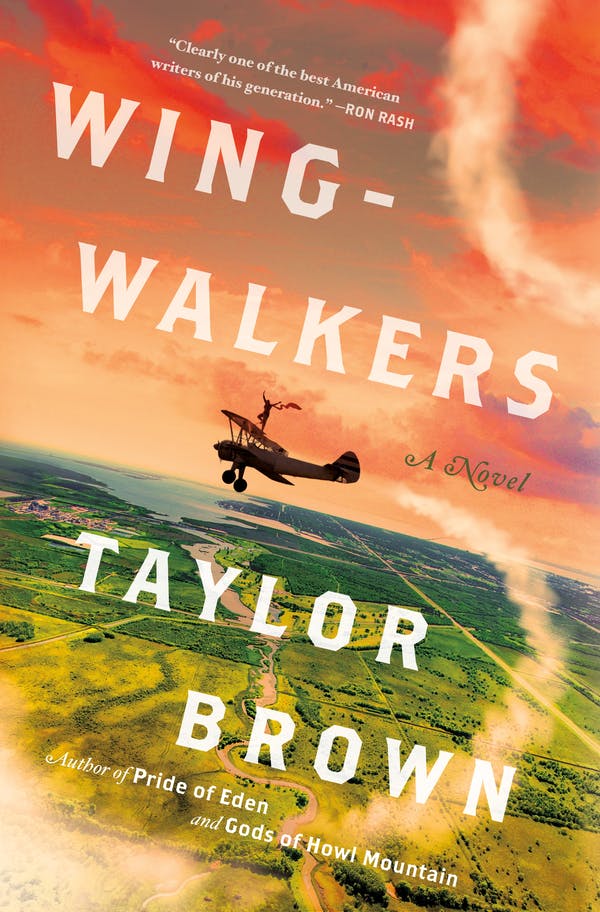
"Wingwalkers"

Taylor Brown grew up on the Georgia coast. He has lived in Buenos Aires, San Francisco, and the mountains of western North Carolina. His books include In the Season of Blood and Gold (2014), Fallen Land (2016), The River of Kings (2017), Gods of Howl Mountain (2018), Pride of Eden (2020), and Wingwalkers (2022). You can find his work in The New York Times, The Rumpus, Garden & Gun, the North Carolina Literary Review, and many other publications. He is a recipient of the Montana Prize in Fiction and the founder of BikeBound.com. He lives in Savannah, GA.

Brown applied the Page 69 Test to Wingwalkers and reported the following:
From page 69:
“Now, let us make sure you meet the King’s requirements.”

Bill balked. These hated scales, his bane.

“Are you aware, sir, that the average height of a medieval knight, based on surviving suits of armour”—here he added the British u in his mind—“was but sixty-five inches from sole to crown?”

“Well, you had better be sixty-six to join the Royal Air Force. A man must reach the rudder pedals, after all. On the scale, please, and remove your shoes.”

Faulkner chewed the inside of his mouth, looking from the man to the scale. He had tried everything to grow taller. Milk and spinach and bunches of bananas, even ginseng powder purchased behind the glazed and dangling ducks of Chinatown. Now he snorted in disgust and pulled off his shoes, a sharp-toed pair of Johnston & Murphy derbies he’d bought in Memphis for twelve dollars and a half, and stepped onto the device with first one foot, then the other, testing the surface like pond ice. The needle wound lazily toward the 120-pound mark but lost momentum, hovering at 113 pounds. The one-legged lieutenant drew a ruler from his tunic and held it atop Faulkner’s head, tracing it toward the hash marks stamped into the measuring bar.

“You are standing on your toes, sir.”

“I can’t help it,” said Bill. “I have very tight tendons.” “Stand flat-footed, Mr. Faulkner, and now.”

His heels clapped down hard, jumping the needle, and the officer waited for the device to quit shaking before he took his measurement.

“Sixty-five and one-half inches,” he said. “Half an inch short. I’m sorry, Mr. Faulkner, but I’m afraid you don’t meet the minimum requirements of the Royal Air Force.”

Faulkner leapt off the scale. “You must be mistaken, sir.”

“All cadets must be at least five and one-half feet tall, or sixty-six inches.”

“So round up.”

“The RAF does not round.”

“So fudge it. Surely you fudge.”

“I’m sorry, Mr. Faulkner, but we cannot use you.”
Does the Page 69 Test work in this case?

Absolutely! Crazily enough, this is not only one of my favorite scenes in Wingwalkers, it's one of the very best pages to introduce the reader to the book as a whole. In fact, it's one of the pages I plan to read in my live events to give folks a taste of the novel.

The scene takes place in New York City, 1918. Based on biographical and anecdotal information, it's a reimagining of the day that 20-year-old William "Bill" Faulkner traveled to the Fifth Avenue office of Wing Commander Lord George Wellesley of the Royal Air Force to enlist as a fighter pilot in the Great War. He was afraid that he needed to be a British citizen to serve in the RAF, so he affected an accent, forged a recommendation letter from a "Reverend Mr. Edward Twimberly-Thorndyke," and added the "u" to his surname -- he was actually born William Falkner!

Wingwalkers follows much of Faulkner's life from an aviation perspective -- a huge, largely unknown inspiration for him -- from his boyhood building model airplanes, to his time in the RAF, to his early aviation-influenced work, to the Flying Faulkners -- a barnstorming troupe he helped to create with his youngest brother, Dean Swift. Faulkner's story alternates with that of a husband-wife barnstorming duo, wingwalker Della the Daring and former WWI ace Zeno Marigold, as they attempt to coax their ailing biplane across the country during the Great Depression. As Faulkner is coming up in the world, Della and Zeno are heading west, and their lives will intersect at some point -- based on a true tidbit from Faulkner's biography.

Overall, I'd have a hard time choosing a better page than this one to introduce someone to the book!
Visit Taylor Brown's website.

Q&A with Taylor Brown.

My Book, The Movie: Wingwalkers.

--Marshal Zeringue

Monday, April 25, 2022

"The Fervor"

Alma Katsu is the award-winning author of seven novels. Her latest is The Fervor, a reimagining of the Japanese internment that Booklist called “a stunning triumph” (starred) and Library Journal called “a must read for all, not just genre fans” (starred). Red Widow, her first espionage novel, is a nominee for the Thriller Writers Award for best novel, was a New York Times Editors Choice, and is in pre-production for a TV series.

Katsu applied the Page 69 Test to The Fervor and reported the following:
From page 69:
She went around the room looking for more. She found it in some places, not in others. Not like dust that floated freely on the air. It was in the bed, under the covers. In the tea towel where the eating utensils rested. Sprinkled in their neatly folded clothing.

She remembered the feeling of the grit forced into her mouth.

And then she saw it: a tiny translucent spider running up her sleeve. Then a ripple of movement on the folded towels as a line of spiders ran, looking to hide in another stack of cloths.

They looked familiar, these spiders. Where had she seen them before?

She had just turned to run and find the nearest neighbor, to warn the others, when everything suddenly spun out of control. Down was up and up was down. She felt like she was being flipped like a giant omelet and now she was lying on the floor and the room was still spinning violently, in a way she’d never felt before. In a way that felt like it would never stop.

Save my daughter. She must not spend the night in this room.

But there was no one there to tell. To warn.
Page 69 is the end of a chapter, and so not a full page. It gives a sense of the threat—strange little spiders where they’re not supposed to be, and because they’re unusual you’re not sure if they’re real or not.

I don’t think it’s a good representation of what the book is about, only because the book is told from four points of view (POV), the four main characters plus journal entries from a fifth character. If you only read the chapters of from one character’s POV, you’d only one side of the story.

This piece is from Meiko’s POV. Meiko is a Japanese woman sent to America by her family to marry a Japanese man starting a business in Seattle (at that time, there were 30 Japanese men for every Japanese woman on the West Coast). Meiko falls in love with and marries her betrothed’s white friend, Jamie. Jamie, a pilot, enlists after Pearl Harbor, and Meiko and her daughter are sent to one of the internment camps. It’s here in Minidoka where Meiko encounters the almost invisible spiders and an outbreak of a mysterious disease called the Fervor.

It is a good representation of Meiko. She’s unsentimental. Practical. She can’t leave the camp, though she’d like to. She worries about her daughter, who seems to be getting more eccentric by the day, resembling Meiko’s own father, a scientist. Her first duty is always to her daughter, not herself, as we see here as she loses consciousness after being exposed to the spiders. She realizes the residents of Minidoka are being used in some kind of horrible experiment and that it’s up to her to save them.
Visit Alma Katsu's website.

The Page 69 Test: The Taker.

The Page 69 Test: The Hunger.

The Page 69 Test: The Deep.

The Page 69 Test: Red Widow.

--Marshal Zeringue

Saturday, April 23, 2022

"Last Dance on the Starlight Pier"

Sarah Bird is the author of eleven novels. Her latest, Last Dance on the Starlight Pier, is out this month from St. Martin’s Press. Set during the Great Depression, the novel focuses on one woman—and a nation—struggling to be reborn from the ashes.

Bird applied the Page 69 Test to Last Dance on the Starlight Pier and reported the following:
Oh, this is fun! Except that, oop, Page 69 has exactly one word on it: “Houston.” Let me cheat and move on to page 71 where we find actual text and discover that this is a fabulous place to slice into the story since it covers a major pivot point.

My protagonist, Evie Grace Devlin, arrives at the Houston train depot “still in shock” after the short trip train she was forced to take from Galveston. She has just been expelled from her nursing school in Galveston right before she attained her dream of becoming a nurse.

This return to Houston is a huge defeat for Evie since the city represents everything she’d hoped to leave behind: a voracious, narcissistic, stage mother and the grim life and even grimmer future she would have in her slummy Houston neighborhood, Vinegar Hill.

I love that on this page, we also get a sense of the times when Evie scans a few headlines. “13 Million Out Of Work: Hoover Orders Wages/House Cut for Employed.” “Funeral Planned for Lindbergh Baby.” “German Nazis Assault Journalists.”

Obviously, I think the Page 69 Test works superbly for my novel. It catches my protagonist at just the moment when her world has crumbled and she must either accept her defeat or keep struggling for a better life free of her suffocating mother.

Page 69 is where Evie Grace begins her journey through the astonishing world of the dance marathons. It is in Houston that she connects with a marathon promoter, is hired as a nurse, and meets the world of vivid characters who will, eventually help her find what she thinks she needs: her nursing degree. Along the way, they will also give her what she truly needs most in life: her family of choice.
Visit Sarah Bird's website.

Q&A with Sarah Bird.

--Marshal Zeringue